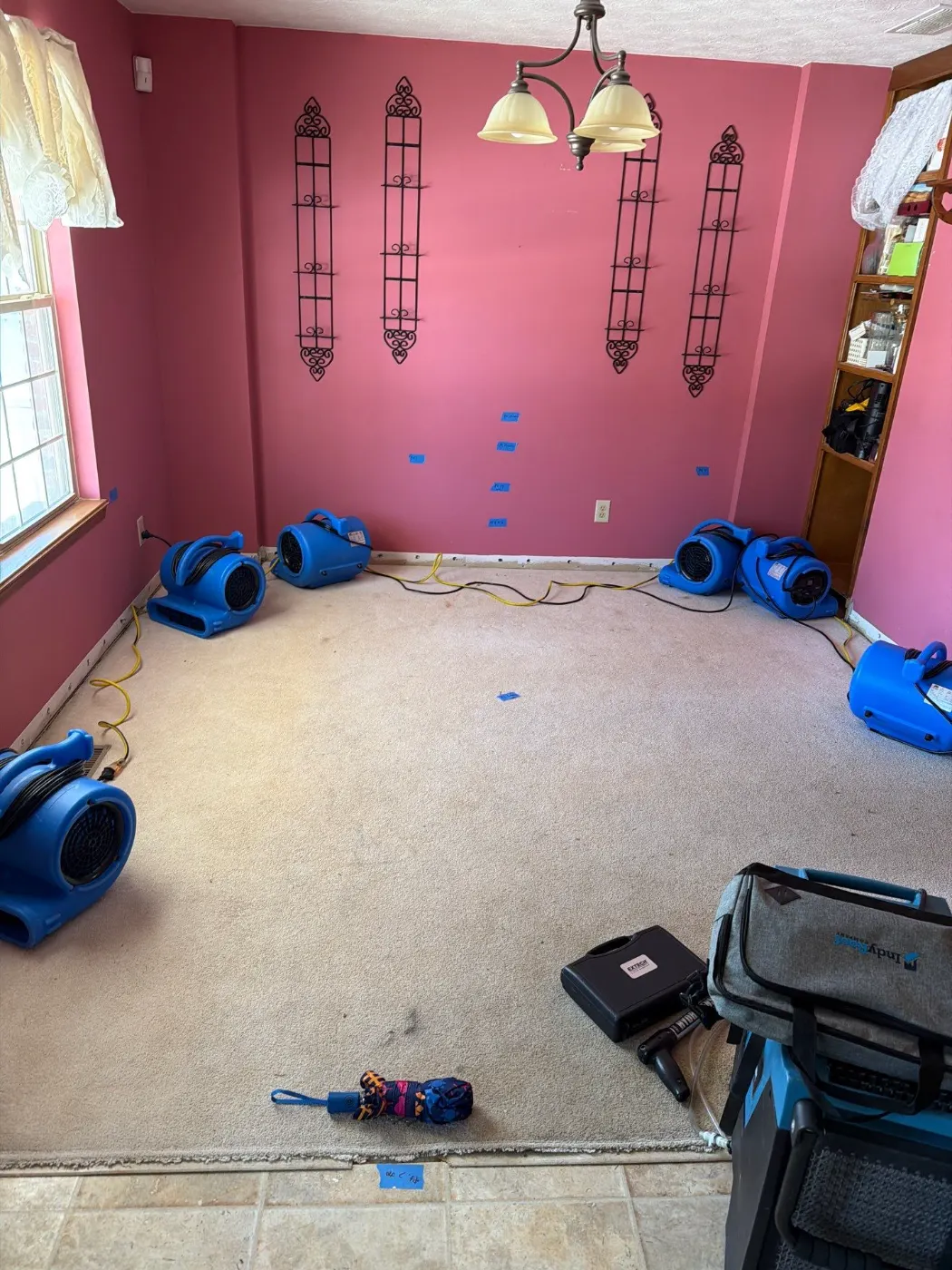
Dishwasher Leak Floor Repair in Holliday Park: Full Breakdown
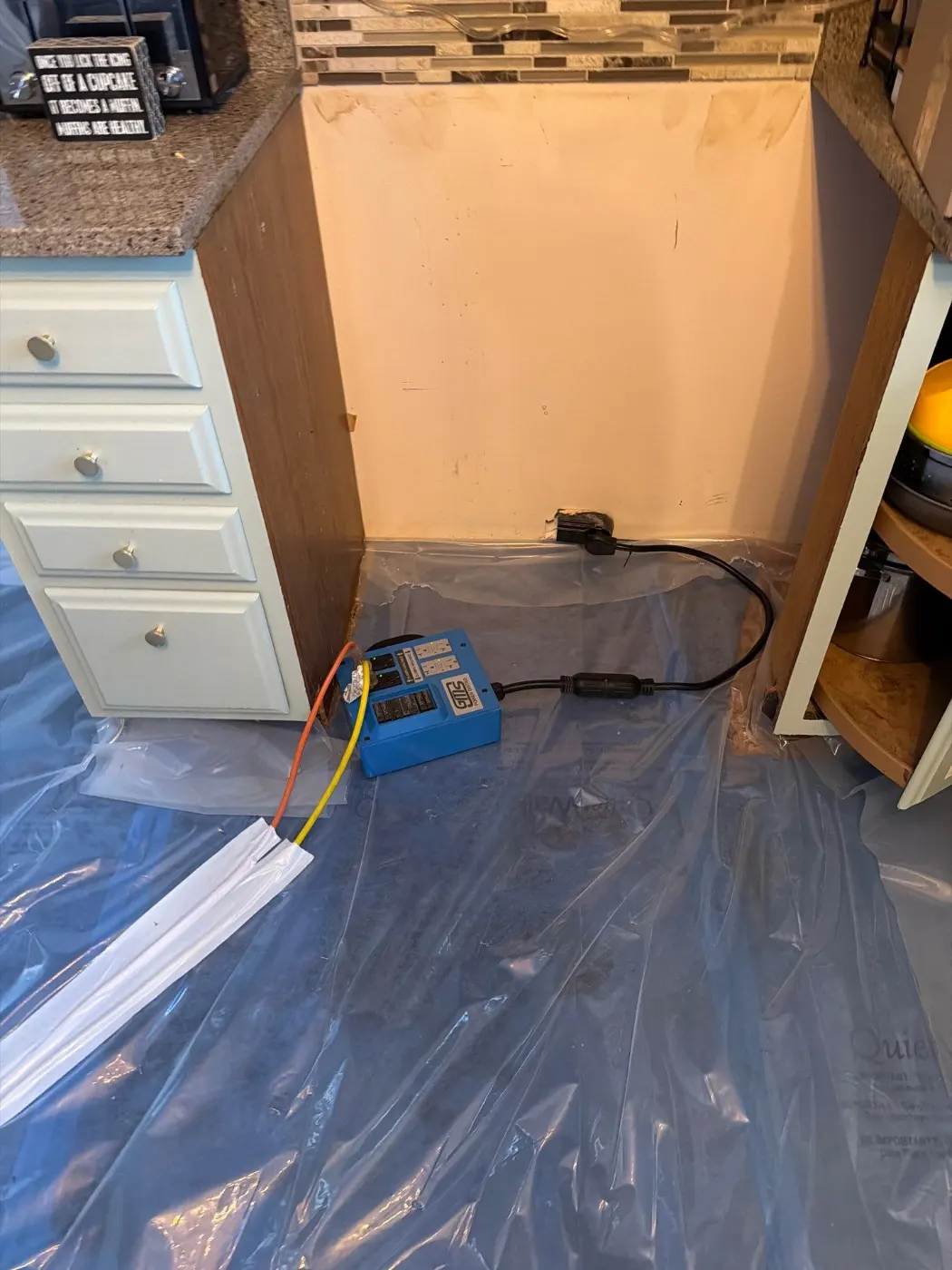
A dishwasher leak rarely announces itself. You load the racks, hit start, and go to bed. By morning the Holliday Park homeowner finds a warped plank near the toe kick, a soft spot in the subfloor, or a slow drip making its way into the basement ceiling below. The water has been working for hours, sometimes days, wicking under cabinets and saturating the particleboard that holds your kitchen together.
At Holliday Park Water Restoration, we have walked into hundreds of kitchens across central Indiana with this exact problem. The dishwasher is still running fine. The floor is the casualty. The question every homeowner asks is the same: do we dry it, patch it, or tear it out? The honest answer depends on what your floor is made of, how long the water sat, and whether the leak hit the subfloor or stopped at the finish layer. If we cannot help, we will tell you directly, but in most cases there is a clear path forward once you understand the tradeoffs.
This guide puts those tradeoffs side by side so you can make a decision tonight, not next week. Because with a dishwasher leak, every hour the moisture sits raises the odds of mold growth, cabinet delamination, and an insurance adjuster questioning your response time.
Why Dishwasher Leaks Damage Floors Differently Than Other Appliance Failures
A dishwasher sits low, vents steam, and connects to both a pressurized supply line and a drain hose. When it fails, water typically escapes from one of four points: the door gasket, the inlet valve, the drain hose clamp, or the pump housing. Each failure mode delivers water at a different rate, and that rate determines whether your floor sees a quick splash or a slow soak that runs for an entire wash cycle before you notice.
The slow soak is the worse scenario. A door gasket weep can release a quart per cycle for months before the laminate near the dishwasher starts to swell. By that point, the subfloor below is often Category 2 water under IICRC S500 standards, meaning it carries detergent residue, food particles, and bacteria. That changes the cleanup from a simple dry out into a controlled remediation. Our team handles these scenarios under our standard water damage restoration protocol, which separates clean drying from contaminated material removal.
The other complication is geography inside the home. Dishwashers usually sit on an exterior wall or share a wall with a sink base. Water finds the cabinet kick plate, runs along the joist bay, and ends up two rooms away. In Holliday Park homes built on slab, the water pools under vinyl plank. In homes with crawl spaces or basements, you may not see the worst damage until you look at the ceiling below.
Age of the appliance matters too. Most dishwashers we see fail are between 8 and 12 years old, right at the point where gaskets harden and inlet valve solenoids start sticking partially open. If your unit is in that range and you spot any rust at the base or mineral staining on the door seal, treat it as a warning sign rather than cosmetic wear. Holliday Park Water Restoration crews respond to a notable share of leaks where the homeowner had noticed a small puddle weeks earlier and assumed it was a one time splash.
Get a Straight Answer About Your Floor
A dishwasher leak does not have to mean tearing out your entire kitchen, but it also does not fix itself. The honest answer is somewhere in the middle, and it depends on how long the water sat, what materials it touched, and whether mold has started. Holliday Park Water Restoration will inspect the damage in your Holliday Park home, give you a written scope of work, and tell you plainly whether you need full restoration or just a few days of drying. Call when you are ready for a direct conversation.
Reading the Table: What These Numbers Actually Mean for Your Decision
The first thing to notice is that drying time and repair cost are not the same conversation. A laminate floor cannot be saved no matter how aggressively we dry it, because the fiberboard core swells permanently the moment water reaches it. Spending three days running air movers on laminate is wasted energy and wasted insurance dollars. We tell Holliday Park homeowners with laminate the truth on day one: budget for replacement, not restoration.
Solid hardwood is the opposite story. It looks worse than laminate at first, with dramatic cupping and gap separation, but it often comes back with the right drying approach. We use floor drying mats that pull moisture through the planks from below, combined with low grain per pound dehumidifiers to keep the room atmosphere dry enough that the wood releases water instead of holding it. Sand and refinish after drying is usually $3 to $6 per square foot, far less than full replacement at $12 to $18.
The subfloor row is the one most homeowners overlook. Even if your finish floor looks fine after a leak, the OSB or plywood below can swell at the seams and lose structural integrity. We check this with a penetrating moisture meter at multiple points, not just the visible damage zone. When subfloor sections read above 20 percent moisture content after 48 hours of drying, replacement is the only honest call. This is also where insurance scopes get challenged most often, and where having documented readings matters.
Luxury vinyl plank deserves its own caveat. The plank itself is waterproof, which leads many homeowners to assume the floor is fine after a wipe down. The trouble is that water travels under the planks through the seams, then has nowhere to evaporate. We have pulled floating LVP six months after a dishwasher leak and found black mold across the underlayment and the top face of the subfloor. If your LVP took on water from a dishwasher, insist on a moisture reading taken from below, either through a cabinet kick or a discreet plank lift in a closet.
If your dishwasher leak has reached a basement ceiling below, the scope expands again. Drywall, insulation, and any finished space below need their own assessment, and we cover that workflow in detail in our guide to ceiling water damage repair. For homes where water tracked down into a fully finished lower level, the response shifts toward the protocols outlined in our basement flooding service page, because the equipment and containment requirements change.
When to Call Versus When to Watch
If the leak was caught within 2 hours and the water stayed on a sealed tile surface, towel drying and pulling the kick plate to air out the cavity may be enough. Anything beyond that, especially water that reached cabinet bases, wood flooring, or an adjoining room, warrants a professional moisture survey within 24 hours. Holliday Park Water Restoration offers same day assessments across Holliday Park, and the inspection itself often pays for itself by catching hidden migration before it becomes a mold claim.
Floor Repair Paths Compared: What Actually Happens in Your Kitchen
Below is the comparison we walk every homeowner through during the inspection. The numbers reflect what we see across central Indiana jobs, including labor, materials, and the drying equipment runtime needed before any rebuild can start.
| Floor Type | Typical Damage Pattern | Salvageable? | Drying Time | Repair Cost Range | Insurance Outlook |
|---|---|---|---|---|---|
| Engineered hardwood | Cupping, edge swell, finish hazing | Sometimes, if caught under 24 hours | 3 to 5 days with mats | $1,800 to $6,500 | Usually covered under sudden discharge |
| Solid hardwood | Cupping, crowning, gap separation | Often, with controlled drying | 5 to 10 days | $2,500 to $9,000 | Strong claim if leak was sudden |
| Laminate | Edge swell, delamination, lifting | Rarely | N/A, replace | $1,200 to $4,800 | Covered, but depreciation applies |
| Luxury vinyl plank | Trapped moisture under planks, adhesive failure | Sometimes if floating, rarely if glued | 2 to 4 days if salvageable | $1,500 to $5,200 | Covered, scope often disputed |
| Tile over plywood | Loose tiles, grout staining, subfloor rot | Tile yes, subfloor often no | 4 to 7 days | $2,000 to $7,500 | Covered, subfloor included |
| Tile over slab | Minimal tile damage, slab moisture | Usually yes | 2 to 4 days | $800 to $3,200 | Smaller claim, often under deductible |
| Subfloor (OSB/plywood) | Swelling, fastener pull, sagging | Depends on swelling depth | 5 to 14 days | $1,800 to $6,000 added | Always included in scope |
Frequently Asked Questions
How fast does Holliday Park Water Restoration respond to a dishwasher leak in Holliday Park?
Our standard response window in Holliday Park and surrounding Central Indiana communities is 60 minutes or less, 24 hours a day. A technician arrives with extraction equipment, moisture meters, and LGR dehumidifiers ready to deploy.
Will homeowners insurance cover dishwasher leak floor damage?
Sudden and accidental discharge is covered under most HO-3 policies. Long-term seepage typically is not. Holliday Park Water Restoration documents the loss with moisture logs and photos that meet carrier requirements, and we bill insurance directly.
How long does it take to dry a kitchen floor after a dishwasher leak?
Most Holliday Park kitchen drying jobs run 3 to 5 days. Hardwood with deep saturation can extend to 7 to 10 days. We verify dry standard with pin and non-invasive meters before removing equipment.
Can hardwood floors be saved after a dishwasher leak?
Often yes, if cupping is under 1/16 inch and moisture content is below 24 percent at intake. Directed airflow and dehumidification can restore solid hardwood. Engineered hardwood with delamination usually requires replacement.
What does dishwasher leak floor repair cost in Holliday Park?
Most Holliday Park dishwasher loss projects run $2,800 to $9,500. Variables include flooring type, subfloor damage, cabinet impact, and whether the claim goes through insurance. Holliday Park Water Restoration provides a written Xactimate estimate before work begins.
Have a restoration question?
Our IICRC certified Holliday Park crew is ready to help. Free assessments, written scopes, no pressure.